
Why Landfills Are More Harmful Than You Think
Numbers You Should Know for Seneca Meadows Landfill and LFGTE Facility
Toxic leachate produced (gal.)
1,368,750,000.00
Greenhouse gas (CO2) emitted (lbs)
4,530,334,000.00
Pollutant gases emitted (lbs)
19,286,880.00
Particle pollution emitted (lbs)
687,740.00
Landfill leachate (n.) – Rainwater filtered through decades of waste, toxic chemicals, heavy metals, and whatever horrors the garbage has been hiding—served daily (example here).
Environmental Impact
Landfills may pose significant environmental challenges and have devastating effects on air, water, and soil quality, threatening ecosystems and human health. Seneca Meadows, the largest landfill in New York State, is often at the center of debates regarding these impacts due to its scale and reported pollution concerns.
How Landfills Damage Ecosystems; Air, Water, & Soil
Landfills release greenhouse gases such as methane and carbon dioxide as organic waste decomposes anaerobically. Methane, a potent greenhouse gas, contributes significantly to global warming. Seneca Meadows is a notable emitter of these gases. Despite capturing some methane for energy generation, much of it escapes into the atmosphere, exacerbating climate change.
Additionally, the landfill emits foul odors caused by the decomposition of waste. Communities surrounding Seneca Meadows often report intolerable smells, attributed to volatile organic compounds (VOCs) and hydrogen sulfide. These airborne toxins may cause respiratory issues, nausea, and headaches, diminishing the quality of life for nearby residents.
Landfills like Seneca Meadows generate leachate, a toxic liquid formed when rainwater filters through decomposing waste. Leachate contains harmful chemicals, heavy metals, and pathogens that, if not managed properly, can seep into groundwater or nearby water bodies. In Seneca Meadows’ case, concerns persist regarding the leachate’s impact on the water quality of local streams and lakes.
Despite the use of liners and treatment systems, no landfill is entirely leak-proof. Over time, barriers degrade, increasing the risk of contamination. Polluted water sources can harm aquatic ecosystems and potentially expose nearby populations to waterborne illnesses.
When landfill waste decomposes or leachate escapes, the surrounding soil can absorb toxic substances like heavy metals, pesticides, and hazardous chemicals. This contamination not only reduces soil fertility but also endangers plant and animal life. Seneca Meadows has faced scrutiny over its capacity to contain such pollutants effectively, especially as the landfill expands.
Long-term soil pollution can make land unusable for agriculture or development, perpetuating ecological damage in the region.
The environmental degradation caused by Seneca Meadows extends beyond pollution. The landfill alters the local landscape, displacing wildlife and impacting nearby ecosystems. Residents in the Finger Lakes region have voiced concerns about its proximity to agricultural areas and wineries, fearing that just the smell alone from the gases they produce could damage the reputation of these industries.
Addressing the Problem
The currently proposed expansion of Seneca Meadows and other landfills contradicts stated regulatory agency policy and guidance which says to use landfills only as a last resort and, in so doing, hinders efforts to adopt sustainable waste management practices such as re-use, recycling and composting. Communities must advocate that their state and federal regulatory agencies actually follow their own guidance and not facilitate the creation and burial of waste.
Conclusion
A complete re-thinking of how we manage waste is urgently needed. By stopping landfill expansions, we will encourage businesses and communities to develop and adopt technologies that minimize waste generation— such as biodegradable packaging, advanced recycling technologies, and products designed for reuse—thus accelerating the development of a circular economy essential to protecting air, water, and soil for future generations.
Health Risks
Living near a mega-landfill poses potentially significant health risks. The types of airborne toxins typically released include methane, hydrogen sulfide, particulate matter, ammonia, and volatile organic compounds (VOCs) such as benzene, toluene, and xylene, These pollutants can be inhaled and enter the respiratory system, blood, and other organs, leading to both short-term and long-term health effects. The proximity to decomposing waste and the toxic byproducts it generates exacerbates these risks, disproportionately impacting vulnerable populations like children, the elderly, pregnant women, and those with pre-existing health conditions.
(HAP)pening Locally
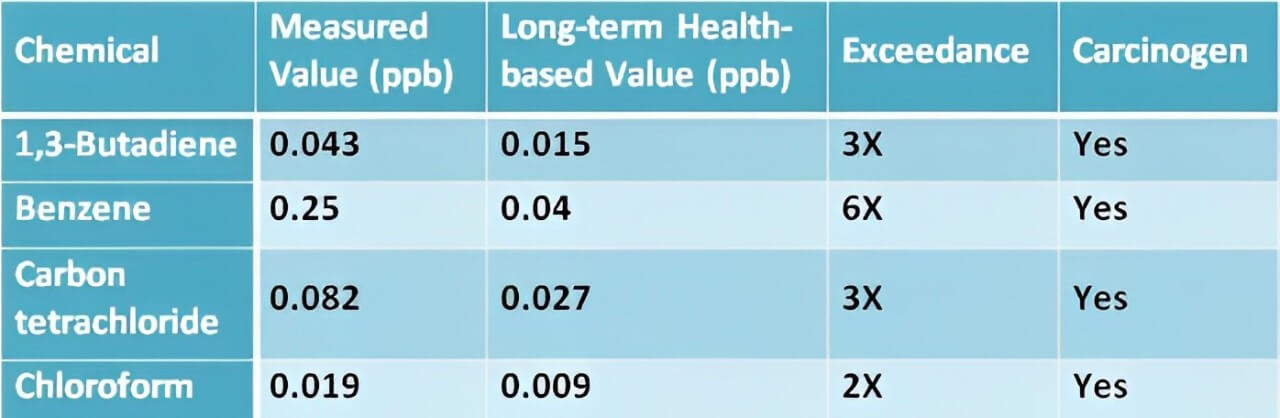
In addition to VOCs, there is another category of air pollutant emitted by Seneca Meadows landfill called hazardous air pollutants (HAPs).
HAPs comprise 187 chemicals including arsenic, lead, cadmium, pollutant gases, solvents, and pesticides. According to the EPA, HAPS “are those pollutants that are known or suspected to cause cancer or other serious health effects, such as reproductive effects or birth defects, or adverse environmental effects.” Many, if not all, HAPs are thought to have no minimum threshold of exposure that is considered “safe” for human health.
The scrolling list below shows fugitive and other emissions for HAPs emitted from Seneca Meadows landfill per Title V Emissions Inventory Tables that area families are forced to breathe synergistic and additive combinations of, 24 hours a day, 7 days a week, 365 days a year. Note: Total quantities of HAPs emitted from Seneca Meadows are measured in tons per year.
Health Risks to Those Living Nearby [Landfills] are Clear
Dr. David O. Carpenter, world-renowned research physician, expert witness, author of over 340 publications in peer reviewed scientific literature, advisor to the World Health Organization and the National Institute of Environmental Health Sciences, recipient of numerous awards, Director of the Institute for Health and the Environment at the State University of NY at Albany, spoke about his research on landfill toxins and public health at a 2010 program at Hobart and William Smith Colleges in Geneva, NY.
An article in the Finger Lakes Times described his presentation as follows (emphasis added):
Carpenter said a 1998 series of air samplings of 25 landfills in New York found high concentrations of carcinogenic chemicals that contributed not only to cancer but to neurological and liver diseases as well.
He said data was collected for 10 years on exposure to these chemicals from breathing the air, having it come into contact with skin, eating food grown nearby or drinking groundwater.
“Statistics from reports of illnesses contracted by people living in certain zip codes shows those near landfills have higher birth defects, thyroid disorders, nervous system disorders, immune system diseases and cancer,” Carpenter said.
He also said some studies have shown higher levels of hypertension, heart disease, diabetes and cardio-pulmonary disease.
“The facts show you are at higher risk of these diseases if you live near a landfill,” Carpenter said.
Later during the panel discussion, he told a questioner that three miles is considered close enough to a landfill to possibly be impacted by the toxins.
“There is reason to be concerned. It’s pretty clear that if you live near a waste site, you have increased exposure to toxins, and toxins increase your risk of disease,” Carpenter said.
![Health Risks to Those Living Nearby [Landfills] are Clear](https://eadn-wc01-14677995.nxedge.io/wp-content/uploads/2025/02/image-3B.jpg "Finger Lakes Times")
Photo capture of front page and reproduction of text courtesy of Finger Lakes Times
Mind you, this was in 2010. In 2016, Dr. David Carpenter wrote a letter directly to the members of the Seneca Falls, NY Town Board, restating these health risks in support of a local law of the time that would have closed Seneca Meadows landfill. And so, here we are in 2025, 28M tons of trash later, still debating what to do.
Synopsis of a Few Landfill Studies
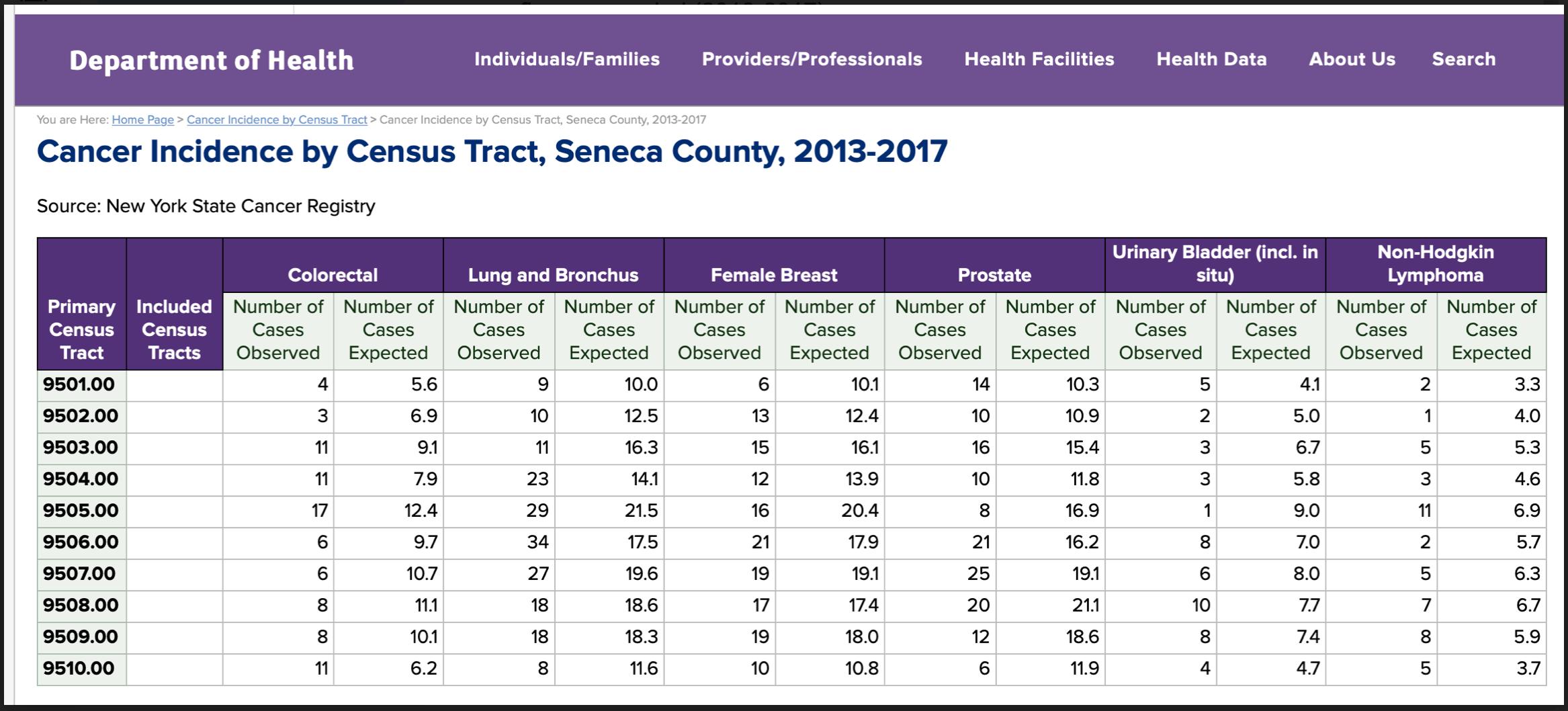
Numerous studies have identified a strong potential link between landfills and diseases, particularly in populations living near these sites. The diseases most commonly associated with landfill proximity include respiratory disorders (e.g., asthma), cancers (e.g., leukemia, liver cancer), gastrointestinal diseases, neurological issues, and birth defects. Contaminants from landfills, such as toxic gases, leachates, and particulate matter contribute to these health risks.
38 New York Landfills
Economic Impact
Landfills are often viewed as necessary for waste management, but their presence may have far-reaching economic consequences for nearby communities. While landfills generate some local revenue through taxes and jobs, their broader negative effects—such as decreased property values and diminished economic growth—can outweigh these benefits and persist for decades. One (less than savory) view of how landfills obtain their revenue—using the example of a company called BFI, the former owner of Seneca Meadows, Inc.—is described here.
Photo courtesy of Katherine Bourbeau
Photo courtesy of Katherine Bourbeau
How Landfills May Lower Property Values
One of the most direct economic impacts of landfills is the potential reduction in property values for homes and businesses near these sites. This depreciation can create a ripple effect that weakens the overall local economy.
Properties located near landfills are often perceived as less desirable due to concerns about air quality, water contamination, and potential health risks. Even if no immediate environmental issues are evident, the stigma associated with living near a landfill can drive potential buyers away.
Studies have shown that property values may decline significantly near landfill sites. According to one study, homes within a one-mile radius of a landfill experience a property value drop of 5-15%, with greater losses depending on the size, age, and reputation of the landfill. Larger landfills, like Seneca Meadows in New York, may depress values in entire towns due to their visibility and environmental footprint.
Businesses near landfills also face challenges:
Photo courtesy of Katherine Bourbeau
Photo courtesy of Katherine Bourbeau
How Landfills May Hurt Local Economies
Beyond property values, harmful landfills create broader economic problems that may inhibit long-term growth and development.
Communities that rely on tourism, agriculture, or wine production are particularly vulnerable to the negative image associated with landfills. For example:
Landfills may place additional burdens on local governments and taxpayers:
Landfills may deter new investments and limit economic diversification:
Reduced property values may directly impact municipal tax collections, creating a cycle of financial hardship:
Photo courtesy of Katherine Bourbeau
Long-Term Economic Challenges
The negative economic effects of landfills are not limited to the short term. Even after a landfill is closed, communities may continue to face financial burdens:
Long-Term Concerns
As landfills grow larger, the environmental, health, and economic consequences may become increasingly severe. Expanded landfills not only exacerbate existing issues but also may pose significant long-term risks for nearby communities and ecosystems. Without proactive measures to limit their growth, landfills may cause irreversible damage to air quality, water resources, soil integrity, public health, and local economies.
Air Pollution
Water Contamination
Soil Degradation
Heightened Disease Exposure
Emergence of New Vectors
Decreased Property Values
As landfills expand, their negative effects—such as odor, pollution, and traffic—become more pronounced, possibly leading to further reductions in property values. Residents living nearby may find their homes unsellable, trapping them in declining areas.
Loss of Local Investment
Increased Municipal Costs
Limited Land Availability
As landfills grow, they consume valuable land that could otherwise be used for housing, agriculture, or conservation. Expanding landfills may be an inefficient use of space, particularly in densely populated areas.
Waste Management Challenges
Expanded landfills significantly contribute to climate change through the release of methane and other greenhouse gases. The cumulative effect of growing waste sites undermines global efforts to limit temperature increases, leading to more severe climate impacts such as rising sea levels, extreme weather events, and disrupted ecosystems.
Generational Consequences
Social Inequities
Supporting Studies and Articles on Environmental Risks
The negative environmental effects of landfills are not limited to the short term. Even after a landfill is closed, communities often continue to face environmental burdens:
Supporting Studies and Articles on Health Risks
Not all studies listed prove a direct cause and effect relationship; however, many if not most do provide support for the association if not increased risk between health issues and exposure to environmental contaminants produced by landfills.
Because the toxic potential of a municipal solid waste (MSW) landfill may be as great as a hazardous waste landfill, studies from hazardous waste landfills are also included in the list below.
An example of how toxic an MSW landfill can be is described in the study, “Acute and Genetic Toxicity of Municipal Landfill Leachate,” where the authors found MSW leachate toxicity to be “greater than both leachate from a Superfund landfill and leachate from the Love Canal landfill.”
How to Access the Articles
If there is not a direct link to the article, simply search the article title in the respective databases, and you will be able to find the full text or abstract of each study. You can access some articles directly, while others may require institutional access or a subscription. If you're affiliated with an academic institution, you may have free access through that organization.